How Much Does It Cost to License a Song? (2026 Fee Guide)
How much does music licensing cost in 2026? Festival film ~$500–$5K per side; national TV ads $40K–$150K+. Master + publishing both. Free music licensing calculator for your track.
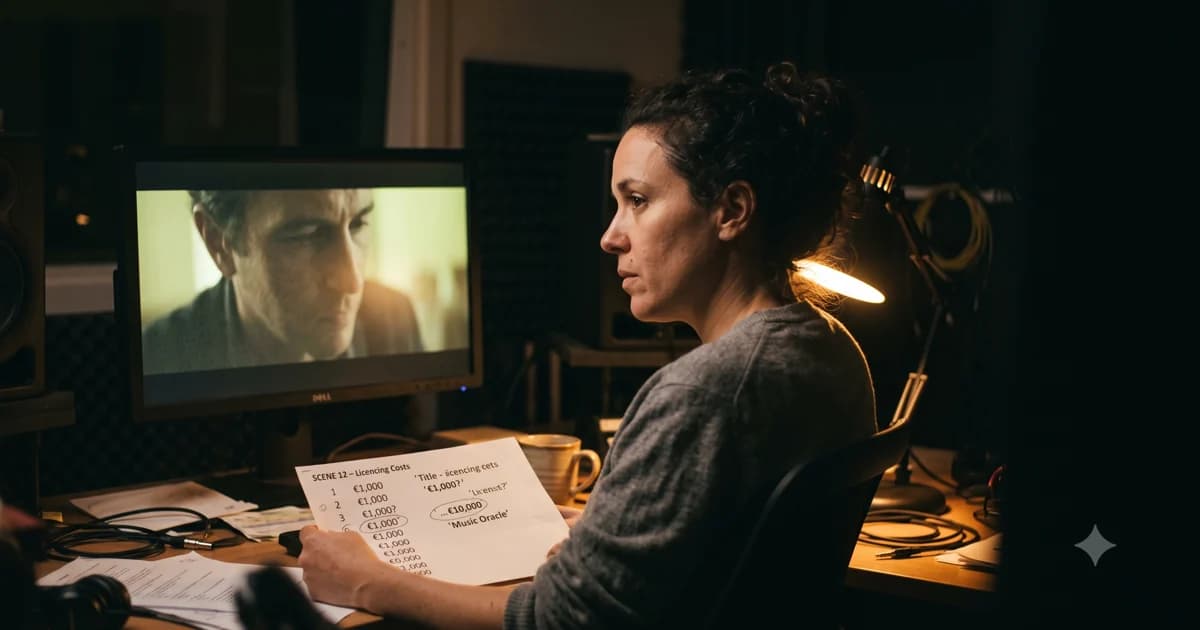
How much does it cost to license a song?
The short answer: from a few hundred dollars to well into six figures — and there is no fixed rate card. What you pay depends on how famous the song is, how you're using it, where it will run (territory), for how long (term), and whether it's featured or in the background.
| Use type | Typical range (recognizable track) |
|---|---|
| Festival / indie film | $500 – $5,000 per side |
| Studio / theatrical film | $15,000 – $75,000+ per side |
| National TV commercial | $40,000 – $150,000+ total |
| Online / social ad | $5,000 – $50,000+ |
| Documentary (limited use) | $1,000 – $10,000 per side |
If you need a number for a specific track, use the free music licensing calculator on Music Oracle: paste the song, get master/publishing holders and a fee range by use and territory. Everything below explains how the pricing works so you can budget realistically and avoid the traps that make music licensing more expensive than it needs to be.
If a quote feels high, read why music licensing costs run up before you drop the song. For the clearance steps after you have a budget, see how to clear a song for film or commercial.
Examples for specific songs — starting-point estimates for tracks people actually clear: Blinding Lights · Levitating · Shape of You · Take On Me · Bohemian Rhapsody · Titanium.
Figures in this guide are illustrative market ranges in USD, the currency sync fees are usually quoted in internationally. Real quotes vary significantly by song, territory, and rights holder. Music Oracle's own services are priced in EUR.
What you're actually paying for
When you license a song, you are not buying "the song." You are clearing two separate rights:
- The master recording: the specific recording you heard. Controlled by a record label, distributor, or the artist.
- The composition (publishing): the underlying song (melody and lyrics). Controlled by the songwriter's music publisher(s).
You clear both. That's why one song often produces two quotes. Occasionally one party controls both sides (a "one-stop"), which is faster and simpler. More often the rights are split, sometimes across several publishers and multiple territories.
This is the single biggest thing buyers get wrong, and it's why a "cheap" song can still be a clearance headache. If you want the full breakdown, see why licensing gets expensive.
Sync fee ranges by use (2026)
These are honest, ballpark ranges for a recognizable commercial track. A famous, high-demand song sits at the top or beyond; an emerging or catalog artist sits well below.
Independent / festival film
Roughly $500 – $5,000 per side, often lower for student and micro-budget projects. Festival-only, limited-term use is the cheapest scenario for a real song.
Studio / theatrical film
Roughly $15,000 – $75,000+ per side for a well-known track, driven by prominence in the film and worldwide, long-term rights.
National TV commercial
Roughly $40,000 – $150,000+ total for a recognizable song in a major market (US, UK, Germany), and higher for iconic tracks. This is the most expensive common use because of reach and brand association.
Online / social ad
Roughly $5,000 – $50,000+, depending on spend, whether it's paid media, and the song. Regional or short-flight campaigns cost less.
Documentary
Roughly $1,000 – $10,000 per side for festival/limited use; more for broadcast and streaming with wide territory. Archival and journalistic contexts sometimes get favorable rates.
YouTube / creator content
Highly variable. Some tracks are impractical to clear individually for a channel; others license for $500 – $5,000+ for a specific video. Many creators use pre-cleared libraries instead.
Short-form / trailer / one-off
A single online short can be a few hundred to a few thousand dollars; a theatrical trailer for a famous song is a premium, separate negotiation.
The five factors that move the price
- Song fame. A current chart hit or an iconic classic commands a premium. A deep cut or emerging artist is far cheaper, often for an identical use.
- Use and prominence. Featured (on-screen, sung, a key moment) costs more than background. A trailer or title use is premium.
- Territory. A single small-market country is a fraction of worldwide. Multi-territory and global campaigns multiply the fee.
- Term. One year costs less than three years; in perpetuity is the most expensive.
- Media and exclusivity. All-media buyouts and any exclusivity push the price up sharply.
Change any one of these and the number moves. That's why a generic "it costs about X" answer is misleading, and why an estimate tied to the actual song and your specific use is worth far more.
The "MFN" wrinkle you'll hit
Most split-rights deals include a Most Favored Nations (MFN) clause: the master and publishing sides agree to be treated equally. If you improve one side's fee, the other automatically matches it. Practically, this means you can't quietly pay one holder more. It ripples across the deal. Budget for both sides at parity from the start.
When licensing is genuinely affordable
- Catalog and older repertoire: often more flexible than current releases.
- Independent / artist-controlled songs: when one party owns master and publishing, it's faster and cheaper.
- Festival-only or single-territory use: dramatically less than worldwide.
- Production libraries and royalty-free: pre-cleared, predictable pricing for defined uses (a different product, not a substitute for a specific hit).
The professional move is to check feasibility early, keep alternatives alive, and never let a single un-cleared song become your only option.
How to get a real number for your track
Generic ranges are for budgeting. For an actual figure you need the specific recording, a clear definition of your use and territory, and the real rights holders. That's exactly what the free tool does: paste a track and it identifies who controls the master and publishing, flags clearance complexity, and returns a fee estimate you can adjust by use and territory.
For one locked track, Single Track Clearance handles quotes, negotiation, and deal coordination at fixed tiers from €300. For a full playlist or project, the music supervision service covers end-to-end clearance strategy. A Quick Check (€150) first? The fee credits toward clearance or supervision if you proceed within 60 days.
Key takeaways
- There's no fixed price. Expect a range, not a rate card.
- You clear two rights: master and publishing, usually as separate quotes.
- The big cost drivers are fame, use, territory, term, and exclusivity.
- MFN ties the two sides together. Budget both at parity.
- Start early: clearance timelines routinely blow deadlines.
- For a specific song, get an estimate tied to the actual rights holders rather than trusting a generic figure.
Frequently asked questions
- How much does it cost to license a song?
- There is no fixed rate. A festival-only indie film might clear a track for a few hundred to a few thousand dollars, while a national TV commercial using a well-known song can run from tens of thousands into six figures. Price depends on the song's fame, the use, the territory, the term, and how the song is featured. The only reliable way to know is to identify the exact rights holders and request a quote, or run the track through Music Oracle for an estimate.
- What is the cost of music licensing?
- Same ranges as this guide: a few hundred dollars for limited festival use up to six figures for a national ad with a famous song. Cost of music licensing is not a single fee — it depends on the song, use, territory, term, and exclusivity. Use the free estimate tool for a track-specific range.
- How much does a music license cost?
- Expect two quotes (master + publishing). Indie/festival: roughly $500–$5,000 per side. National TV with a recognizable track: often $40,000–$150,000+ total. There is no fixed music license cost — only a range until rights holders quote your exact use.
- How much to license a song for a film?
- For an independent or festival film, expect roughly $500–$5,000 per side (master and publishing separately). Studio or theatrical use with a well-known track often runs $15,000–$75,000+ per side, depending on prominence and worldwide rights. Student and micro-budget projects sometimes negotiate lower.
- How much does music licensing cost?
- Music licensing cost depends on five drivers: song fame, how prominently the track is used, territory, term, and exclusivity. A background use in a single-country online video costs far less than a featured placement in a national TV ad. Budget a range, not a single number, until you have quotes from the actual rights holders.
- Do I pay the artist directly to use their song?
- Usually no. You clear two separate rights: the master recording (controlled by the label or artist) and the composition/publishing (controlled by the songwriter's publisher). You typically pay whoever administers each side, not the performer directly.
- Why do I get two quotes for one song?
- Because most songs have split rights: one fee for the master and one for the publishing. Unless the same party controls both (a 'one-stop'), you negotiate and pay each separately, and they are often quoted at parity via an MFN clause.
- How long does it take to clear a song?
- Anywhere from a few days for a simple, one-stop track to several weeks for a famous song with multiple publishers and international rights holders. Start clearance as early as possible. It routinely blows deadlines.
- Is royalty-free music the same as a licensed song?
- No. Royalty-free and production-library music is pre-cleared for defined uses at predictable prices, which is why it's cheaper. Licensing a specific commercial recording means negotiating with the actual rights holders, which is what drives the cost and the timeline.
Renato Horvath
Music supervisor and licensing expert with over a decade of experience in film, advertising, and content production. Founder of Eastaste (2012) and member of the UK & European Guild of Music Supervisors.
Related articles
Why ChatGPT Can't Tell You Who Owns a Song's Rights
AI and Google give you a plausible publisher name. Clearance needs the exact recording, every writer, and every publisher share. Here is the difference, and why the gap can sink a deal.
How Long Does It Take to Clear a Song? (Real Timelines)
Honest clearance timelines by scenario, from 3 days for a one-stop indie track to 3 months for an estate-controlled classic, and what actually causes the delays.