Why ChatGPT Can't Tell You Who Owns a Song's Rights
AI and Google give you a plausible publisher name. Clearance needs the exact recording, every writer, and every publisher share. Here is the difference, and why the gap can sink a deal.
Blog
Practical guidance on music rights, licensing, and clearance for filmmakers, content creators, and advertisers.
Featured

AI and Google give you a plausible publisher name. Clearance needs the exact recording, every writer, and every publisher share. Here is the difference, and why the gap can sink a deal.

AI music is cheap, fast, and sounds fine. The risk isn't the sound; it's delivery day, when your distributor asks for the music paperwork and there's no one who can sign it. A supervisor's plain-language read on where things stand in 2026.

Honest clearance timelines by scenario, from 3 days for a one-stop indie track to 3 months for an estate-controlled classic, and what actually causes the delays.

The exact clearance process a music supervisor follows: identify both rights holders, define the use, request quotes, negotiate, and paper the deal, without blowing your deadline.

Every licensed song produces two invoices: master and publishing. Here's who controls each side, why one song can have eight rights holders, and how to find yours.

Licensing a known song is slow, expensive, and complicated, and sometimes it's still the right call. A supervisor's honest framework for when to pay the fame premium and when library music is smarter.

How much does it cost to license a song? From €500 for festival film to six figures for TV ads — sync fee ranges by use, plus a free estimate for your track.

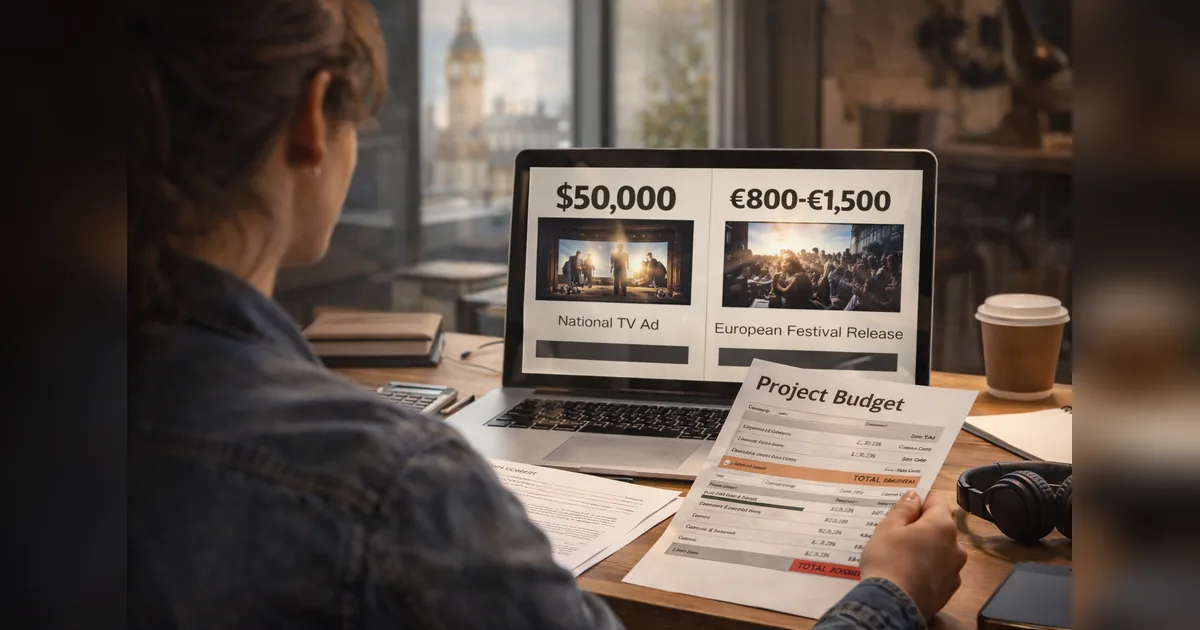
How much does music licensing cost? Sync fees spike on famous songs and national ads — here's why, plus practical ways to cut your music budget without dropping the track.
All articles

Finding the perfect song on Spotify doesn't mean you can use it. Here's what filmmakers need to know about playlist music and licensing.

YouTubers and social creators are often confused about Fair Use, background music, and copyright strikes. Here's what actually matters.

Just because a song plays on Instagram doesn't mean you have the rights to use it. Business accounts face different rules than personal creators.

The moment a post is paid, Instagram's built-in music usually stops covering you. Here's what creators actually owe on sponsored content — and how to avoid takedowns and indemnity traps.
Use Music Oracle to identify rights holders, understand ownership structure, and get pricing context.
Try Music Oracle →